EMT school can feel difficult at first because students have to learn medical information and put it into practice. An EMT basic course includes classroom lessons, hands-on training, and supervised clinical and field experience. Regular study, repeated practice, and a willingness to ask questions can help you prepare for exams and build confidence in your skills.
You are thinking about becoming an EMT. That’s a great decision! Here’s what you must keep in mind: learning the job takes more than remembering medical terms. In other words, you need to learn and understand what to do when someone needs your help and how to work through each step calmly.
We understand this may sound like a lot when you’re starting from scratch. If you have never studied medicine before, you may wonder whether you can keep up with the lessons and pass your exams. The good news is you don’t need to arrive with medical knowledge. At our EMT school, students get classroom lessons (along with practical training) and supervised experience.If you want a shorter starting point, our emergency medical responder course is a good way to learn the basics of emergency care first.
What Makes EMT School Hard?
EMT training covers more than basic first aid. At the EMT school, you will learn how to assess patients, recognize signs of medical problems, respond to injuries, provide care before a patient reaches a hospital, and more.
A few parts may take more time than others.
– Medical terms and body systems: You will learn how the body works and what can happen when something goes wrong.
– Patient assessment: Our experts will teach you how to check a patient’s condition and decide what needs attention first.
– Hands-on skills: You will practice tasks such as checking vital signs, applying bandages, and moving patients safely.
– Making decisions: Since an emergency can involve several problems at once, your emergency medical technician training will help you learn how to assess the situation and respond appropriately.
– Keeping up with the schedule: Classes, revision, practical work, and externships take time. Plan your week to make it easier to keep up.
How EMT School Works From Start to Finish
At ETA, EMT training has three main parts.
1. Classroom Lessons
You will learn about anatomy and physiology, medical emergencies, trauma, patient assessment, breathing problems, cardiac emergencies, and more.
2. Hands-On Practice
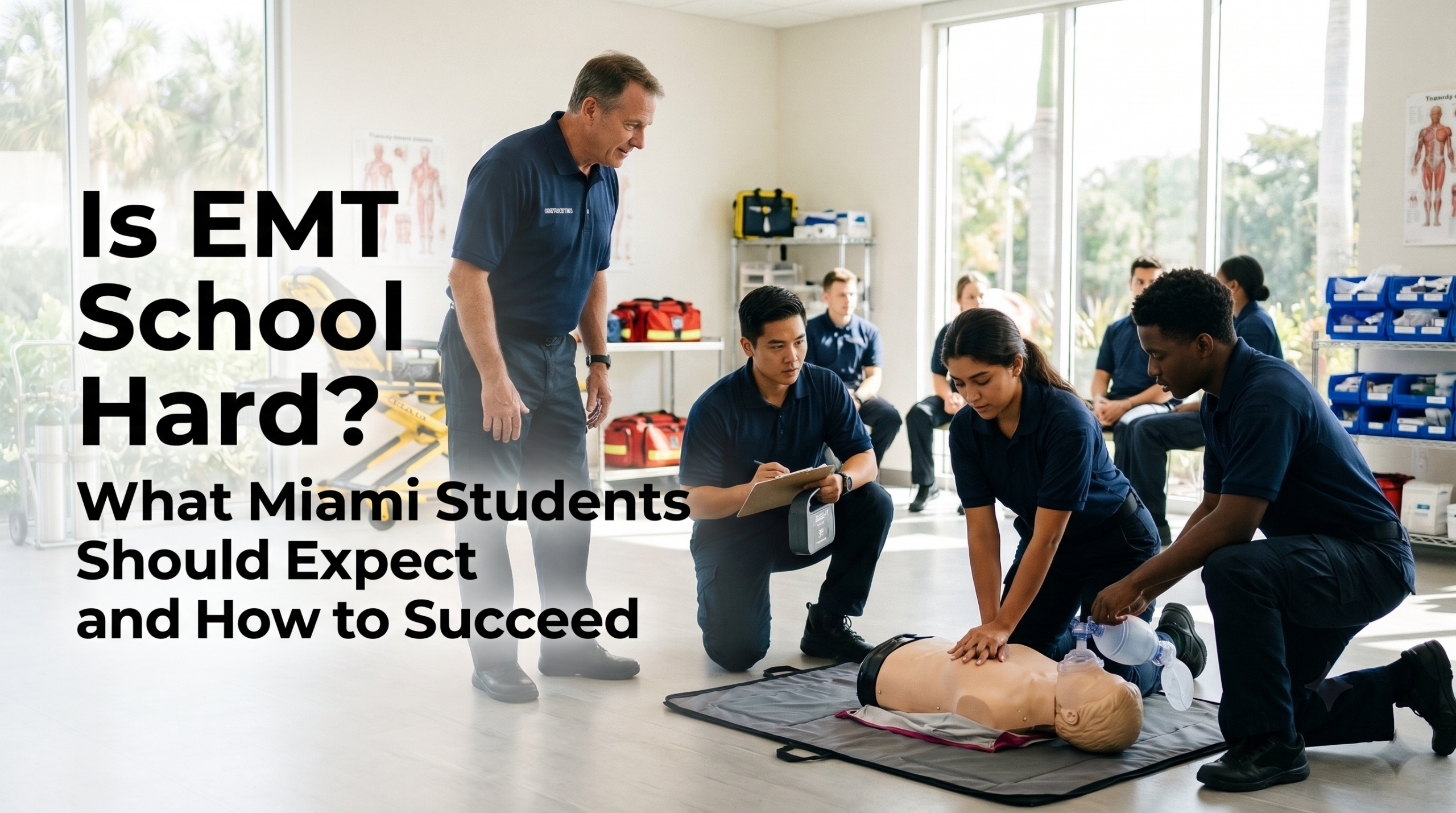
Our lab training builds skills like taking vital signs, using airway equipment, applying bandages, immobilizing patients, and moving them safely. New students sometimes feel awkward at first, but over time, they learn to perform the required steps efficiently.
3. Clinical and Field Externships
Our emergency medical technician training includes 24 hours of hospital clinical externship and 72 hours of field externship. During this supervised training, you will become familiar with patient care, documentation, and EMTs’ role in emergency settings.
How to Succeed in EMT School
Start with a few simple habits.
Review your notes after class – Spend 20 to 30 minutes reviewing your notes to remember what you covered that day.
Study one topic at a time – Don’t push yourself too much, but give your complete attention to one topic before moving to the next one.
Test yourself – Practice questions are perhaps the best way to figure out which topics you know and which ones need another look.
Ask questions early – If you ever come across a question, ask it right away. This will help you understand the basics of your EMT course.
What Should You Study First?
| Study area | How to prepare |
| Anatomy and physiology | Learn the main body systems and their functions |
| Patient assessment | Review the steps and practice following them in order |
| Medical and trauma emergencies | Study the signs, symptoms, and responses covered in your lessons |
| Practical skills | Repeat each skill under instructor supervision |
| Communication | Practice listening carefully and giving clear information |
Our EMT basic course covers several connected subjects, so don’t worry if you need to revisit a topic.
What to Consider Before Choosing an EMT Program
Here are a few things worth checking:
- Total training hours
- Admission requirements
- Practical training
- Exam requirements
- Externship requirements
Our admission requirements include a high school diploma or GED, a physical examination documented by a licensed physician, and other required records. Students must also be at least 18 years old upon graduation. That said, applicants who start before age 18 must provide parent or guardian consent.
How Our Emergency Training Academy Can Help
Our 300-hour EMT program includes classroom instruction, lab training, hospital clinical rotations, and field externships. We follow the framework established by the U.S. Department of Transportation.
Emergency medical professionals who work in paramedicine, firefighting, emergency medicine, and more own and operate our program.
If you’re comparing EMT basic training programs in Miami, we suggest looking at the full course structure rather than focusing only on the number of classroom hours. Believe it or not, these practical requirements matter just as much when you’re preparing for a job that involves patient care.
Once you finish EMT training, you can keep building your career. Many students move on to our paramedic training program for more advanced patient care, while certified professionals can renew or add skills through our continuing education courses and our ACLS course.
Take the Next Step Toward EMT Training
You don’t need to know everything before your first class. But you need to be ready to learn and practice every day. This way, you will keep working on the areas that challenge you. With a steady study routine and a clear understanding of the course requirements, you will approach your emergency medical technician training with greater confidence.
Contact our EMT school in Miami today to learn more about our EMT program and the steps to get started.
FAQs
What to study for the EMT basic exam?
You can start with anatomy and physiology, patient assessment, airway management, respiratory and cardiac emergencies, medical conditions, trauma care, and ambulance operations.
Is the EMT test difficult?
It depends! The test can be challenging because you need to remember medical information and apply it to different situations. However, you can prepare by reviewing regularly and practicing with practice questions.
What are basic EMT skills?
Basic EMT skills include assessing patients, checking vital signs, managing airways, applying bandages, safely moving patients, and communicating with other emergency care professionals.
How to study EMT?
We suggest maintaining a regular study schedule and dividing your lessons into smaller topics. Also, make it a habit to review notes after class, answer practice questions, and repeat practical skills under instructor supervision.
How to pass the EMT exam?
First, attend your classes and complete the required training. Our EMT basic training program includes a minimum cumulative average of 73% before final examinations and a written final exam score of at least 73%. Students must also pass the practical component and complete the required clinical and field externships.